

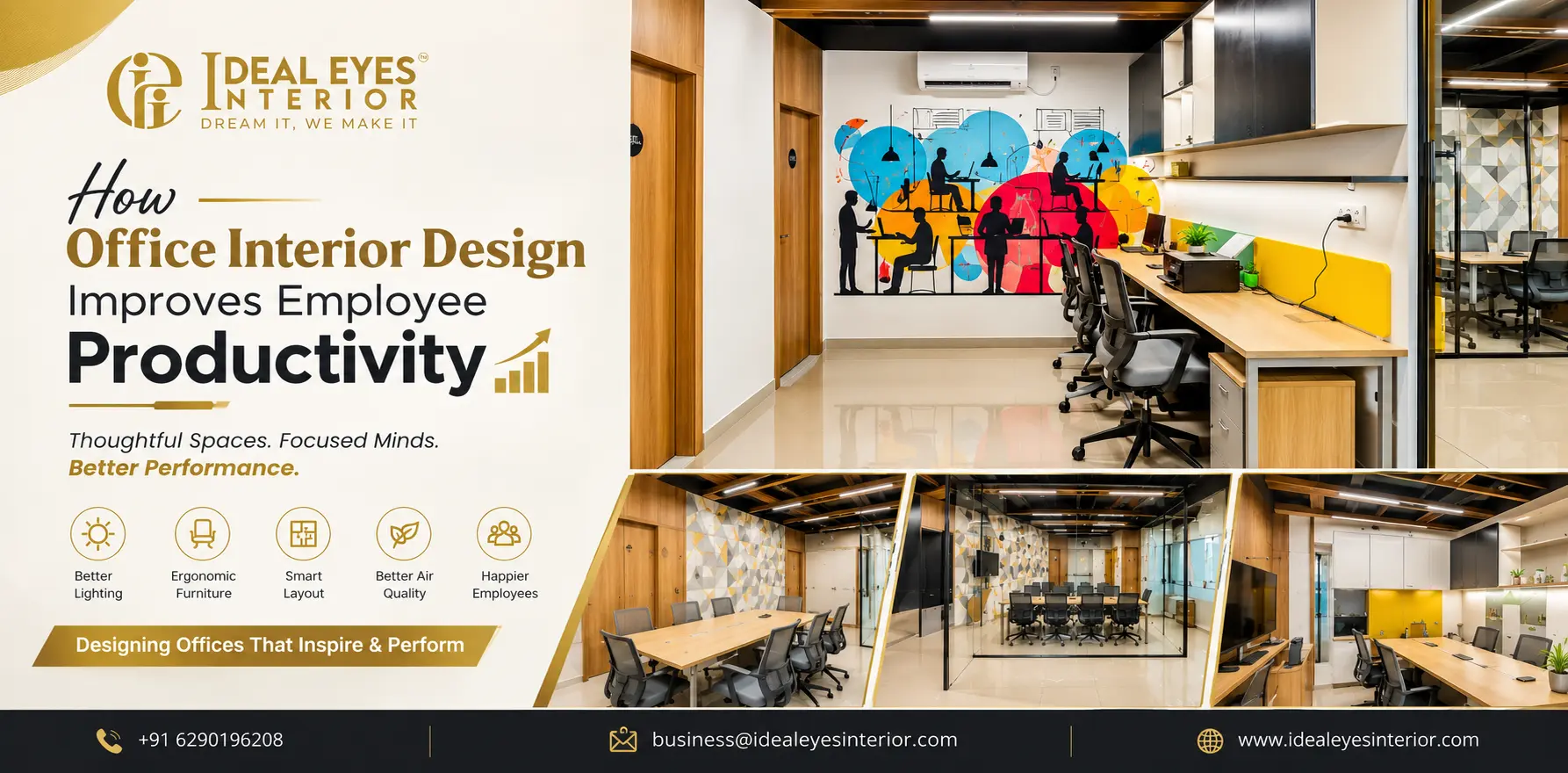
Quick answer: Office interior design improves employee productivity by removing everyday friction — poor lighting, uncomfortable seating, noise, and a layout that doesn’t match how people actually work. Fix those elements, and focus, energy, and output tend to follow.
Walk into a cramped, poorly lit office and you can feel the energy drain out of the room. People slouch through the day, meetings run long in rooms never built for focus, and small irritations pile up until concentration quietly gives out. The space either works with people or against them. Fix the layout, lighting, and furniture, and much of that friction disappears on its own.
For companies across India setting up a new office or reworking an existing one, this isn’t a cosmetic choice. It shapes how teams show up and perform, day after day.
Why Office Interior Design Matters
Consider how many hours a week people spend at their desks. The chair they sit in, the light above their heads, the noise drifting from the next cubicle — all of it shapes how well they concentrate and how drained they feel by late afternoon.
Good corporate office interior design was never really about impressing visitors. It builds a space where employees can put their energy into actual work, instead of adjusting an uncomfortable chair or straining to hear a colleague over a noisy air conditioner. Skip this step, and businesses often pay for it anyway, through absenteeism, dipping morale, or staff who quietly start looking elsewhere.
How Office Interior Design Improves Employee Productivity
No single change fixes productivity on its own. It builds from several smaller design decisions, each pulling in the same direction.
Natural Lighting:
Daylight keeps people alert in a way artificial light rarely does. Offices leaning too heavily on harsh fluorescent tubes leave employees fatigued well before lunch. Positioning workstations near windows and swapping solid walls for glass partitions lets daylight travel deeper into the floor, reaching desks that would otherwise sit in shadow all day.
Ergonomic Furniture:
A chair with no lower-back support, or a desk set at the wrong height, causes a low-grade discomfort that chips away at focus without anyone quite noticing why. Ergonomic furniture isn’t an extra. For anyone sitting through eight-hour workdays, it’s a basic requirement.
Office Layout Planning:
The arrangement of desks, walkways, and departments decides how easily people move and work together. Get the office layout planning right, and unnecessary walking drops, bottlenecks near shared equipment disappear, and dependent teams end up sitting close together instead of scattered across the floor.
Noise Control:
Open-plan offices look great in photos, but without proper acoustics, they turn into a productivity trap fast. Carpeting, acoustic panels, and soft furnishings absorb sound and stop conversations from travelling across the entire floor.
Indoor Plants and Air Quality:
Plants do more than soften a room visually. They improve indoor air quality, and research in environmental psychology links greenery with lower stress and sharper concentration. Pair that with proper ventilation, and the air employees breathe stays fresh rather than stale and recycled.
Collaboration Spaces and Private Focus Areas:
Different tasks call for different settings. Team discussions thrive in open collaboration spaces, while detailed, concentration-heavy work needs private focus areas tucked away from foot traffic. Offer only one type of space, and employees end up doing deep work in a noisy corner or holding meetings somewhere meant for quiet thinking. Neither works well.
Breakout Zones:
A short mental reset between tasks makes a real difference to how sharp someone feels afterward. Breakout zones give employees a place to step away without leaving the building, a small feature that matters more to sustained output than it might seem.
Brand Identity and Comfort:
Weaving brand identity into the design, through colour, materials, or signage, gives employees a sense of belonging somewhere specific rather than sitting in a generic box. Comfort and mental well-being tend to follow close behind: a space that feels considered makes the people in it feel considered too.
Common Office Design Mistakes
Most offices go wrong in predictable ways. Cramming in extra desks to save on real estate leaves no breathing room to think. Ignoring acoustics turns an otherwise decent open office into a constant distraction. Skipping ergonomic assessments sets employees up for fatigue and, over time, genuine health complaints. Chasing visual appeal without asking how people actually move through the space usually produces an office that photographs beautifully but functions poorly.
Practical Tips Before Designing an Office
Start by walking the current space and noting exactly where people get stuck: near the printer, around the coffee machine, in that one badly lit corner nobody likes. Ask employees directly. They usually know precisely what isn’t working, often better than any consultant would. Prioritise lighting and seating first, since both affect comfort every single day. Leave some flexibility in the layout so departments can grow without forcing a full redesign a year later.
Conclusion
A productive office is rarely the result of a single design choice. It comes from getting the basics right—comfortable furniture, a practical layout, good lighting, quieter work areas, and spaces where people can collaborate or focus without unnecessary distractions. When these elements work together, employees spend less time dealing with discomfort and more time doing meaningful work.
If you’re planning a new workspace or upgrading an existing office, working with experienced professionals can make the process more practical and efficient. Ideal Eyes Interior, we believe every office should be designed around the people who use it every day. A well-planned workspace not only supports productivity but also creates an environment where teams feel comfortable, motivated, and ready to perform at their best.
FAQs
1. How does office interior design affect employee productivity?
It shapes comfort, focus, and energy levels throughout the day. Good lighting, ergonomic furniture, and a sensible layout cut down on physical strain and distractions, so employees can concentrate on their work instead of fighting their surroundings.
2. What is the most important factor in office design for productivity?
No single factor decides it, though natural lighting and ergonomic furniture usually have the most immediate impact. Both affect physical comfort and alertness directly, shaping how well someone can stay focused over a long stretch.
3. Do open office layouts reduce productivity?
They can, if acoustics and noise control get overlooked. Open layouts are great for collaboration, but without private focus areas nearby, employees end up struggling to concentrate during heads-down work.
4. How much does office interior design cost in India?
Costs vary depending on office size, materials, and scope of work. A basic renovation typically costs less than a full-scale corporate interior design project involving custom furniture, partitions, and branding elements.
5. Can indoor plants really improve productivity?
Yes. They improve indoor air quality and are consistently linked to lower stress and better concentration. Beyond that, plants make a workspace feel less sterile, which supports overall employee well-being.